You plug in your guitar, turn a few knobs, and the sound that comes out has nothing to do with the one on your favorite records. Good news: an amp can be dialed in using simple principles, and three or four consistent settings are often enough to turn a dull tone into a clear, warm and musical sound. Here is the step-by-step method for adjusting your guitar amp and getting a good sound, whatever model you own.
How to adjust your amp for a good sound?
The basic method is to start from a clean sound with a flat EQ, raise the channel volume and then the gain in stages, and adjust the EQ according to your style. In practice, start with low gain, the volume halfway up and the three EQ bands (bass, mids, treble) centered, then listen and adjust one setting at a time.
The most common trap is wanting to change everything at once. The sound of an amp is the result of a chain: guitar, cable, channel settings, EQ, and then the room itself. If you change several parameters at the same time, you can no longer tell what improves or degrades the sound. Move forward step by step and make a mental note of each change. If you do not have an amp yet, our guide to choosing your first guitar amp will help you identify the model suited to your level and your budget.
What are the basic settings on a guitar amp?
The essential controls on an amp are the gain (or drive), the volume, and the three-band EQ: bass, mids and treble. Some models add presence, resonance or an extra channel, but these three parameters already cover most styles.
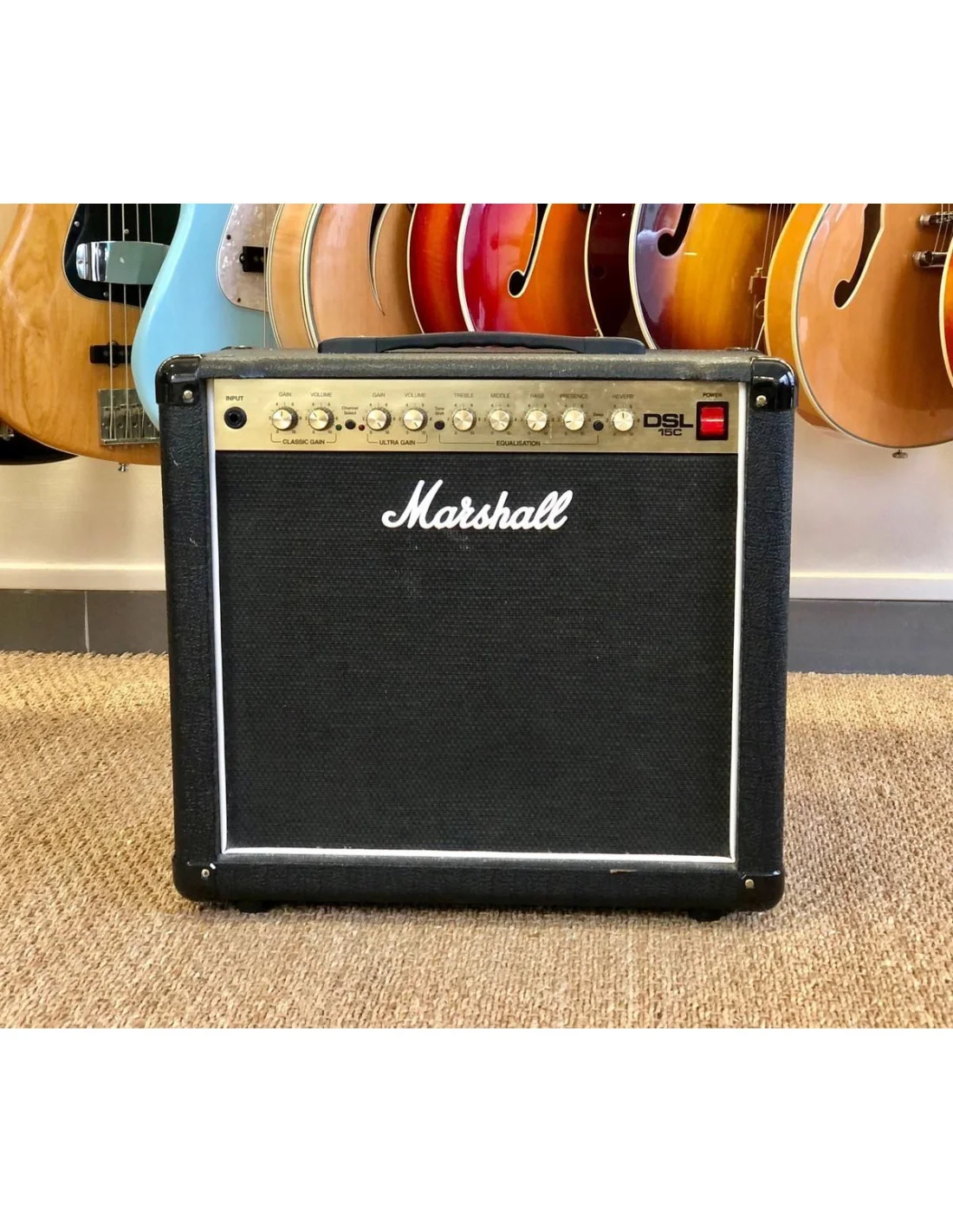
- Gain or drive: controls saturation. Low, the sound is clean; high, it becomes saturated and compressed.
- Volume: sets the output level. It is what delivers the "punch" you feel in the room.
- Bass, mids, treble: shape the tone. Mids are the most important band for guitar presence in a mix.
Before chasing a saturated sound, always listen to the clean tone of your amp: it reveals the basic quality of the guitar-amp pairing.
How to set the gain without overdriving the sound?
Gain should be set according to your style and the level of saturation you want, not according to a universal value. For a clean sound, keep the gain low (10 to 30%). For light crunch, turn it up until saturation appears when you pick hard. For a heavily saturated sound, push it further, but without going past the point where the sound gets mushy and loses definition.
A good reference point: if chords sound "muddy" and low notes blur into each other, the gain is too high. Turn it down a notch and compensate with the volume if needed. Great lead players often keep a moderate gain to preserve picking dynamics.
How to adjust the EQ to match your style?
The EQ depends on your style, but also on your guitar and the room. Starting from a flat EQ, a few reference points work in most cases: rock favors assertive mids, metal pushes the bass and cuts some mids, blues and jazz stay on a round tone with softened treble.
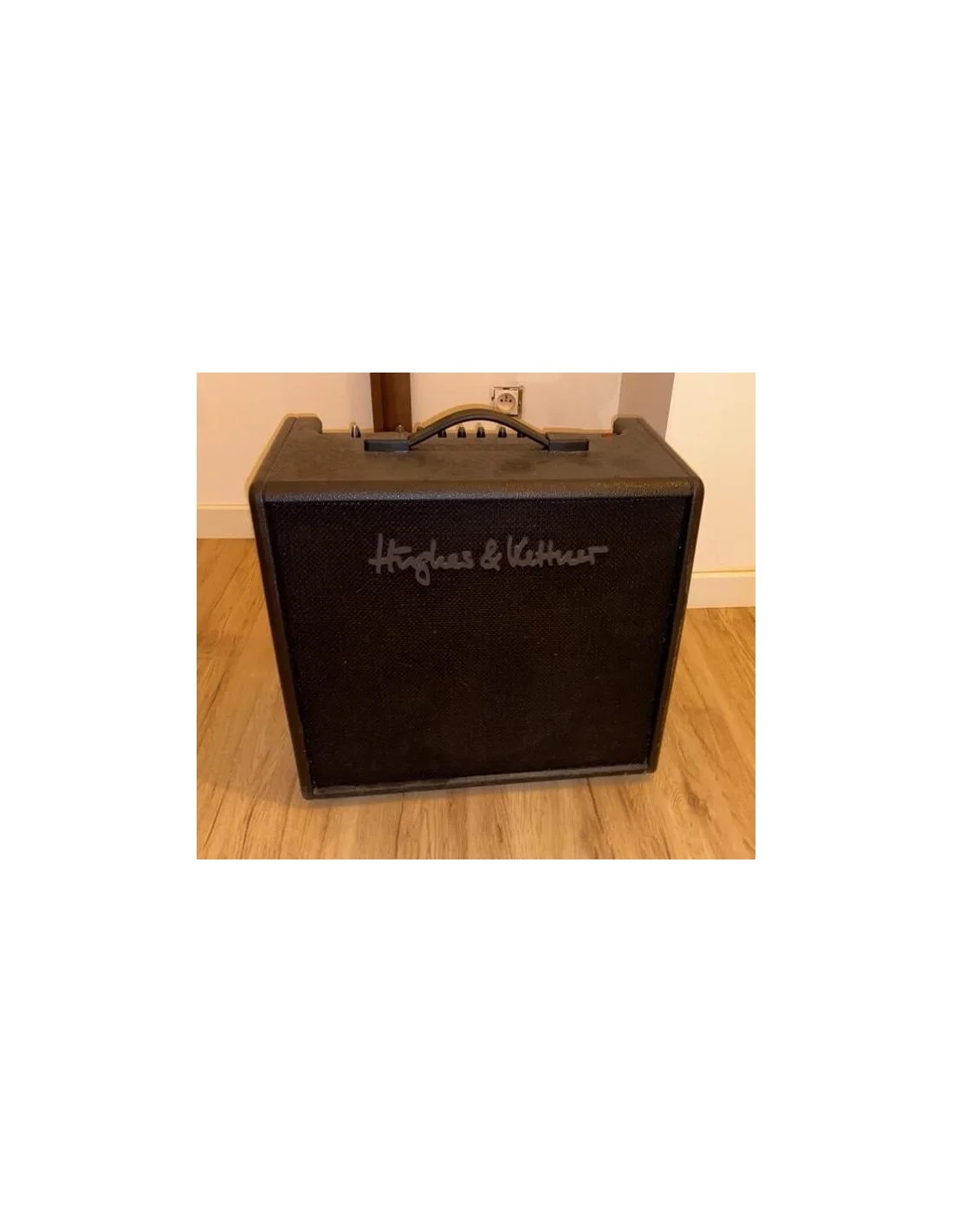
Beware of too much bass: on a small amp or in a reverberant room, low frequencies quickly become muddy. And overly present treble tires the ears and emphasizes finger noise. Adjust in small quarter-turn steps and test by playing a real song, not just isolated notes.
🧑💼 The Green Musicians tip
Set your amp up loud in real playing conditions, not through headphones. Positioning in the room changes the result enormously: move the amp about 30 cm away from the wall to avoid a boomy bass effect, and raise it slightly so the sound reaches ear level.
How to adjust a tube amp?
On a tube amp, natural distortion kicks in when the tubes are pushed, that is when the channel volume is turned up. The gain adds saturation upstream, but it is the volume that makes the tubes "sing". If you play in an apartment, the volume may be limited: use a power attenuator or choose a low-wattage amp to get tube compression without blowing up the decibels. To clearly understand the differences between the technologies, our article on tube amps versus transistor amps reviews their respective strengths.
For a clean tube sound, set the channel volume fairly high and keep the gain low. For crunch, turn both up together and fine-tune with the EQ. Fine adjustment is done by ear: tubes react to the dynamics of your playing, which makes every setting unique. You will find this type of model in our selection of tube amps.
How to adjust a transistor or modeling amp?
Transistor amps and modelers often offer more settings: multiple channels, amp simulations, built-in effects. The method stays the same: start from a clean channel, set the gain and the EQ, then add effects sparingly. On a modeler, do not stack too many simulations: one amp simulation plus a light reverb is usually enough. Brands like Marshall and Orange built their reputation on simple, effective settings, as told in our articles dedicated to Marshall amps and Orange amps.
Factory presets are useful for exploring, but they are designed to sound good "in a vacuum": always adapt the EQ to your guitar and your room. Save your own settings when you find a sound you like.
⚠️ Mistakes to avoid
- ❌ Turning everything up to the max: gain, volume and EQ at maximum produce a mushy, tiring sound. Look for the balance point, not the maximum.
- ❌ Adjusting through headphones: what you hear on headphones does not match what you hear in the room. Adjust out loud in your real conditions.
- ❌ Changing everything at once: impossible to know what is improving the sound. Change one single setting at a time.
FAQ - Guitar amp settings
Why does my amp sound bad even though my guitar is good?
The problem almost always comes from the settings or the placement, not the gear. Check that the cable is in good condition, go back to a flat EQ, then adjust the gain and the volume gradually.
Should you set the gain or the volume first?
Set the channel volume to a comfortable level first, then add the gain according to the saturation you want. The volume sets the level, the gain colors the sound.
How do you get a good clean sound?
Low gain, raised channel volume, flat EQ then fine-tuned. On a tube amp, turn the volume up to make the tubes work; on a transistor amp, the clean sound is more direct.
Is the mids setting important?
Yes, it is the most important band for guitar presence in a band or a recording. Cutting too many mids makes the sound "hollow" and buried.
How do you set an amp for playing in an apartment?
Use a low-wattage amp, a power attenuator, or the low-volume channel. Reduce the bass, which gets muddy at low volume.
Are the presets on a modeler reliable?
They are a good starting point, but always adapt the EQ to your guitar, your pickups and your room. Save your settings once you find the sound.
Should I set the amp differently for the studio?
For recording, the microphone placement on the speaker matters as much as the settings: an off-center, slightly angled mic gives a softer, more natural sound.
And that's it! We hope this article helped you understand how to adjust your amp for a good sound. All that's left is to browse Green Musicians to find the amp of your dreams at the best price.
We offer a complete catalog of musical instruments featuring brands from all over the world such as Fender, Gibson, Marshall, Orange, Vox and many more. Whether you are an amateur or a professional musician, our marketplace is designed to bring you the best of music.
Green Musicians is also the music marketplace where everyone can sell or buy music gear with total confidence: new, refurbished and used instruments, as well as software, plugins, sheet music and samples.
For any question or comment about this article, or if you would like to suggest an article topic, feel free to speak up below.

 What is a looper and how to use it?What is a looper and how to use it? The loop principle, choosing a model, practicing, composing and playing live: the complete beginner's guide.Read more
 How long does it take to learn the drums?How long does it take to learn the drums: first grooves, first songs and independence. The realistic benchmarks and the right practice rhythm.Read more
 Vestax: Japanese legend of DJ equipment and vinyl turntablesVestax, founded in Tokyo in 1977, made DJing history with its revolutionary vinyl turntables and legendary mixers. A look back at the legacy of a cult brand that continues to inspire DJs around the world.Read more
 Hagstrom: Swedish guitars and basses since 1958Hagstrom, Swedish guitar excellence since 1958.Read more
 Altamira: classical and flamenco guitars inspired by Spanish traditionAltamira offers classical, flamenco, gypsy jazz guitars and historical replicas inspired by Spanish tradition. From beginner to concertist, discover authentic lutherie at the right price.Read more
 NoiseWorks VoiceAssist: cleaner vocals in less timeWhat if the next real upgrade to your studio were not a new microphone or a preamp, but time? That is the question NoiseWorks raises with VoiceAssist, a plugin that tackles the least creative part of vocal work: cleanup. Background noise, room reverb,Read more
 How to sound a band rehearsal?How to sound a band rehearsal: gear, speaker placement, volume balance and voice amplification for effective rehearsals that protect your hearing.Read more
 How to get a good stage monitor mix?How to get a good stage monitor mix: gear, console connections, volume settings without feedback and placement tips for musicians.Read more
 Which PA amplifier for a room of 100 people?Which PA amplifier for a room of 100 people: power, speaker types, placement and budget advice to sound your venue properly.Read more
 How to connect your computer to a PA system?How to connect your computer to a PA system: audio interface, cables and console settings, with the fallback solutions and the mistakes to avoid.Read more
Leave a comment