That shrill whistle that forces you to turn the microphone down in the middle of a concert, do you know it? Feedback is the nightmare of musicians and sound technicians. Good news: it follows simple physical rules, and it can almost always be avoided with a few good reflexes and the right gear.
How do you avoid feedback at a concert?
To avoid feedback at a concert, you have to prevent the microphone from picking up the sound of the speakers: place the speakers in front of the microphones, use cardioid microphones, keep a reasonable volume and keep the stage monitors away from the microphones. Feedback appears when the sound coming out of a speaker is picked up by a microphone and then re-amplified in a loop.
Understanding the mechanism helps you react quickly: a microphone picks up the sound of the speaker, that sound is re-amplified, comes out of the speaker, is picked up again by the microphone, and the loop feeds itself on a precise frequency. The higher the volume, the more inevitable the loop becomes. The solution is therefore not to push the volume, but to break the loop.
Why does feedback trigger?
Feedback triggers when three conditions come together: a microphone close to a speaker, a high volume and a frequency that resonates with the room. Omnidirectional microphones pick up sound from all directions and feed back much faster than cardioid microphones.
The most sensitive frequencies are the upper mids, between 1 and 5 kHz, where the ear is the most sensitive and where the voice has the most energy. This is why feedback often "whines" on a high register before running away on a precise frequency.
Which microphone should you choose to avoid feedback?

Choose a cardioid or supercardioid microphone, which picks up mainly what is in front of it and rejects the sounds coming from behind. Dynamic microphones, like the great stage classics, are renowned for their resistance to feedback and their robustness.
To choose your stage microphone well, our guides which microphone to record a voice with and the Shure or Sennheiser comparison explain the differences in directivity and tone that also matter on stage. For streaming or video conferencing, the advice in our microphone guide for streamers applies at home.
How do you place the speakers to avoid feedback?
Always place the main speakers in front of the microphones, that is between the stage and the audience, and aimed toward the audience. A microphone must never be in the firing line of a speaker: this is rule number one against feedback.
Raise the speakers on stands above microphone height and keep enough distance between the edge of the stage and the speakers. If you have to put a speaker on the floor, move it as far back as possible from the microphones.
How do you set the stage monitors without feedback?
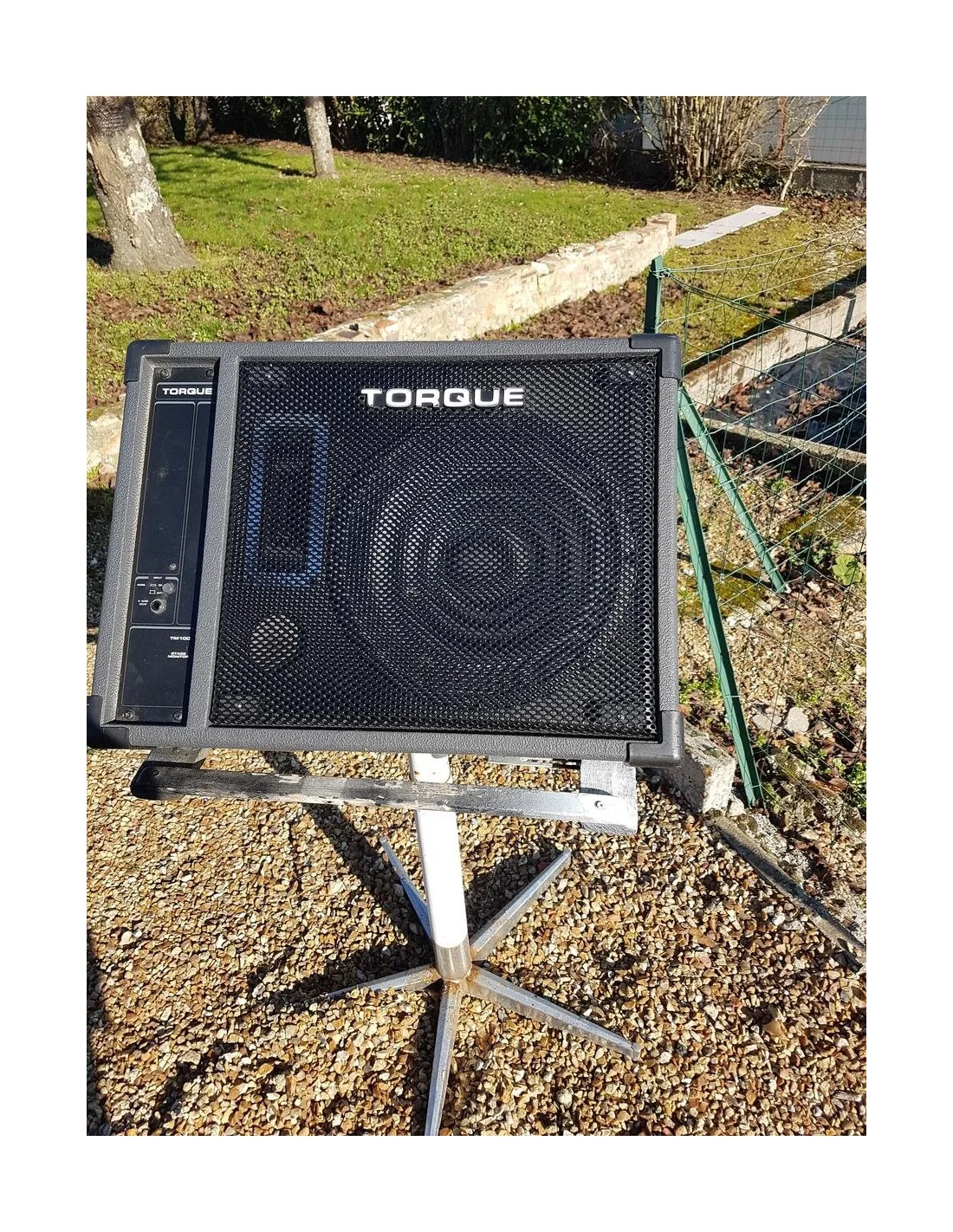
Stage monitors raise a particular problem because they are placed precisely near the microphones, on stage. To limit feedback, keep the monitors at a moderate volume, aim them toward the musicians' ears (not toward the microphones) and keep them away from the open microphones.
The singer must stand in front of their monitor and the microphone must stay between them and the monitor: the singer's body then acts as a shield. If the feedback comes from the monitor, lower it or move it rather than raising the microphone.
Which sound settings help to avoid feedback?
On the mixing console, cut the useless frequencies: a high-pass filter on the voices (around 100 Hz) removes energy that serves no purpose and can trigger low feedback. If feedback persists, slightly reduce the frequencies concerned with the equalizer.
Also keep a healthy volume margin: if the system approaches feedback on every sustained note, the overall level is too high for the setup. It is better to lower the volume a little than to play with a whistle ready to burst at any moment.
How do you react when feedback starts?
When feedback starts, react within two seconds: lower the channel of the microphone concerned (not the master), then identify the cause before raising it again. Often, all it takes is to make the singer step back one pace, turn the microphone or lower the monitor.
Never let feedback settle in hoping that it will disappear: it will only get worse and damage the listening experience of the audience. A useful reflex for the singer: cover the capsule of the microphone with a hand or move away from the nearest speaker while waiting for the technician to correct it.
What to remember
- ✔ Speakers in front: no microphone in the firing line of a speaker, ever.
- ✔ Cardioid microphone: it rejects sounds coming from behind.
- ✔ Moderate monitors: just the right volume, aimed at the ears, not the microphones.
- ✔ High-pass filter on the voices: less useless energy, less low feedback.
- ✔ React fast: lower the offending channel within the first seconds.
Can feedback come from the instrument rather than the microphone?
Yes, feedback can affect electric guitars: the pickups of the instrument pick up the sound of the amp and start whistling, especially with gain pedals. This is called microphonic feedback, a classic phenomenon with heavily saturated guitars.
To avoid it, move the guitar away from the amp, lower the gain or use a noise gate pedal that cuts the signal when you are not playing. Guitarists who play close to their amp with a lot of saturation know this fight well: a good noise gate is often the simplest solution.
Which gear really helps against feedback?
The most effective gear against feedback is a good cardioid microphone, correctly placed speakers and an equalizer to cut the sensitive frequencies. Automatic anti-feedback processors exist, but they mainly act on the return frequencies and do not replace a good installation.
At home (streaming, video calls, podcast), a dynamic or cardioid condenser microphone placed close to the mouth, with speakers or headphones, avoids most of the problems. Also discover how to record a podcast at home with good sound and no feedback.
🧑💼 The Green Musicians tip
Test the system before the concert: with the microphone open, slowly raise the volume until you hear the beginning of feedback, then lower it one notch. This reference point tells you the available margin. Do the test again with the monitors on: it is the real configuration that counts.
FAQ - Avoiding feedback at a concert
Why does feedback whistle on a precise frequency?
The microphone-speaker loop feeds itself on the frequency where the system has the most gain and where the room resonates the most. This is why feedback always seems to "choose" a precise note.
Does a dynamic microphone feed back less than a condenser microphone?
Generally yes, because stage dynamic microphones are cardioid and designed for close-up use. But directivity counts more than the technology: a well-used cardioid condenser can feed back less than an omnidirectional dynamic.
Should you cut the low end on the voice microphones to avoid feedback?
Yes, a high-pass filter around 100 Hz is recommended: it removes breath noise, foot vibrations and a low-frequency energy that can trigger feedback without improving the voice.
How do you avoid feedback with headphones?
Headphones completely isolate the ear from the speakers, so no more feedback is possible through the ears. This is the ideal solution for streaming, video calls or a singer who prefers a headphone monitor.
Is feedback dangerous for the gear?
Prolonged feedback can damage the tweeters of the speakers and tire the hearing of the audience and the musicians. It should always be cut quickly rather than left to last.
Can feedback be removed with an equalizer?
It can be reduced by cutting a few decibels on the frequency that whistles, but this does not fix the cause. The real solution is physical: move the microphones away from the speakers and lower the volume.
Why does my electric guitar feed back even when I am not playing?
This is microphonic feedback: the pickups of the guitar pick up the sound of the amp. Move away from the amp, lower the gain or use a noise gate to cut the signal when it is at rest.
And there you go! We hope this article helped you understand how to avoid feedback at a concert. All that is left is to browse Green Musicians to find the microphone and the sound system of your dreams at the best price.
We offer a complete catalog of music gear featuring brands from around the world such as Shure, Sennheiser, Mackie, Studiomaster, Proel and many more. Whether you are an amateur or a professional musician, our marketplace is designed to offer you the best of music.
Green Musicians is also the music marketplace where everyone can sell or buy music gear with complete confidence: new, refurbished and used instruments, as well as software, plugins, sheet music and samples.
For any question or comment about this article, or if you would like to suggest an article topic, feel free to share your thoughts below.

 What is a looper and how to use it?What is a looper and how to use it? The loop principle, choosing a model, practicing, composing and playing live: the complete beginner's guide.Read more
 How long does it take to learn the drums?How long does it take to learn the drums: first grooves, first songs and independence. The realistic benchmarks and the right practice rhythm.Read more
 Vestax: Japanese legend of DJ equipment and vinyl turntablesVestax, founded in Tokyo in 1977, made DJing history with its revolutionary vinyl turntables and legendary mixers. A look back at the legacy of a cult brand that continues to inspire DJs around the world.Read more
 Hagstrom: Swedish guitars and basses since 1958Hagstrom, Swedish guitar excellence since 1958.Read more
 Altamira: classical and flamenco guitars inspired by Spanish traditionAltamira offers classical, flamenco, gypsy jazz guitars and historical replicas inspired by Spanish tradition. From beginner to concertist, discover authentic lutherie at the right price.Read more
 NoiseWorks VoiceAssist: cleaner vocals in less timeWhat if the next real upgrade to your studio were not a new microphone or a preamp, but time? That is the question NoiseWorks raises with VoiceAssist, a plugin that tackles the least creative part of vocal work: cleanup. Background noise, room reverb,Read more
 How to sound a band rehearsal?How to sound a band rehearsal: gear, speaker placement, volume balance and voice amplification for effective rehearsals that protect your hearing.Read more
 How to get a good stage monitor mix?How to get a good stage monitor mix: gear, console connections, volume settings without feedback and placement tips for musicians.Read more
 Which PA amplifier for a room of 100 people?Which PA amplifier for a room of 100 people: power, speaker types, placement and budget advice to sound your venue properly.Read more
 How to connect your computer to a PA system?How to connect your computer to a PA system: audio interface, cables and console settings, with the fallback solutions and the mistakes to avoid.Read more
Leave a comment