A well set-up drum kit changes everything: it sounds better, plays more easily and tires you less. Setting it up requires no complicated tool or experience, just method. Here is how to set up your drum kit step by step, even if you are a complete beginner.
How to set up your drum kit as a beginner?
Setting up a drum kit goes through three steps: adjusting your position (height of the throne and the elements), tuning the heads (even tension) and placing the cymbals (height and angle). It is this foundation that makes playing comfortable and the sound clean.
The good news: there is no universal perfect setup. The goal is to find a configuration that suits you, where each element falls naturally under your sticks without effort or contortion.
What to remember
- ✔ Posture: thighs parallel to the floor, straight back, elements within reach.
- ✔ Heads: even tension all around the circumference.
- ✔ Cymbals: comfortable height, slightly angled toward you.
How to adjust the height of your throne and your elements?
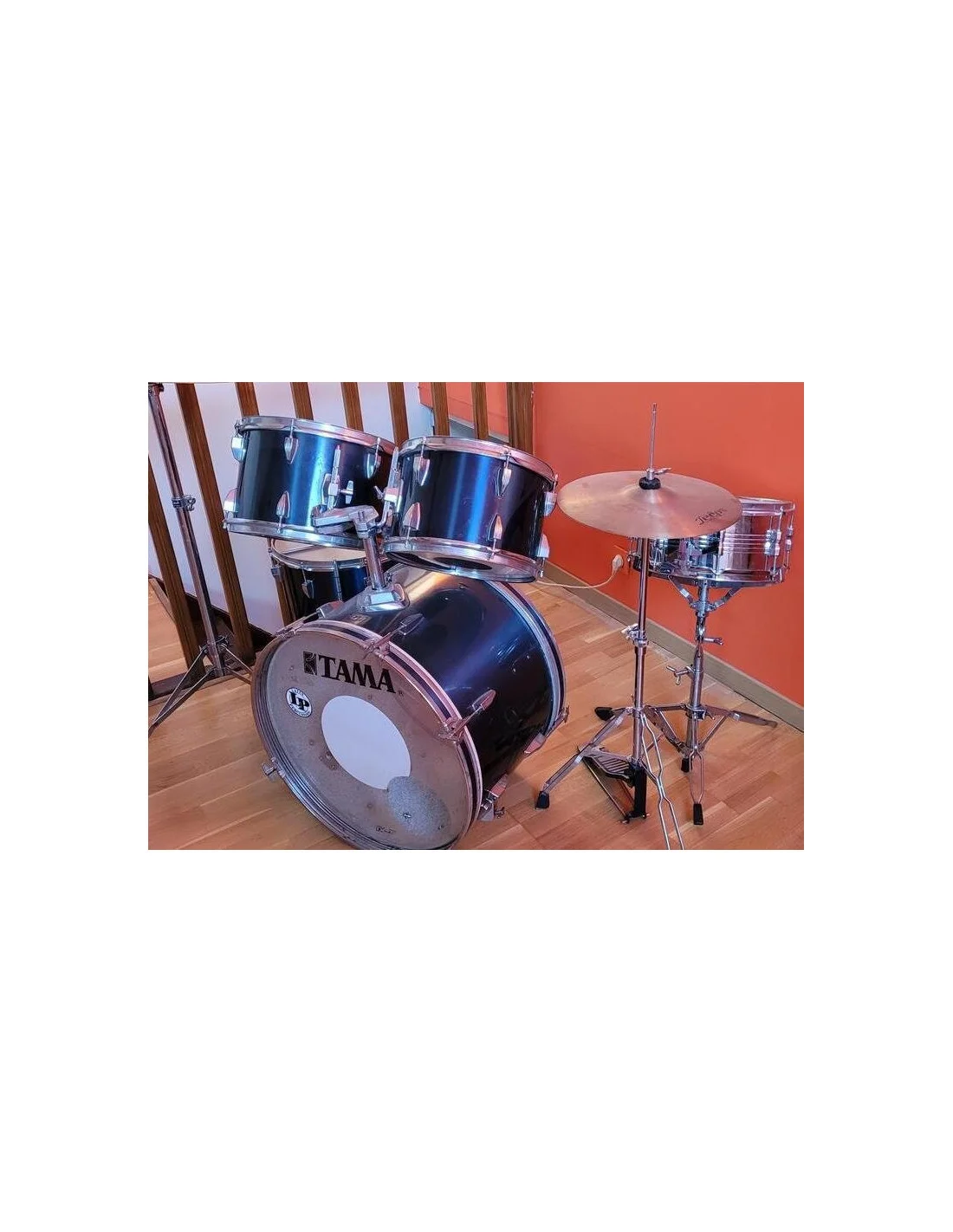
Sit down and adjust the throne so that your thighs are parallel to the floor and your knees are slightly below your hips. Then place the snare drum between your legs, the bass drum under your right foot, and the hi-hat under your left foot. Each element must be reachable without stretching.
The golden rule: your elbows must stay close to your body and your forearms form a comfortable angle. If you have to raise your shoulders or lean to strike, the element is badly placed. This basic setup transforms playing comfort and prevents pain.
How to tune the heads of your drum kit?
Tuning the heads is the most intimidating step, but it follows a simple logic: each tension rod must be tightened evenly. Tighten the rods in a cross pattern, little by little, striking near each rod to check that the pitch is identical all around.
A head that is too loose sounds dull and lacks rebound; a head that is too tight sounds sharp and metallic. Look for the happy medium where the head resonates clearly and rebounds well. Quality drumheads, such as those from Remo, greatly ease tuning thanks to their manufacturing consistency.
How to place your cymbals correctly?
Place the cymbals at shoulder height, slightly angled toward you, to strike the edge with the flat of the stick without aiming too high. A cymbal that is too high strains the shoulder, a cymbal that is too low gets in the way of the arms. The hi-hat must open and close comfortably under your left foot.
Slightly angling the cymbals also reduces stick breakage, because the stroke slides over the edge instead of hitting it head-on. This detail extends the life of your cymbals and your sticks.
🧑💼 The Green Musicians tip
Always tune the snare drum before the rest: it is the most played element and the one that gives the sound its character. A well-tuned snare drum masks many flaws of an entry-level drum kit.
What mistakes to avoid when setting up for the first time?
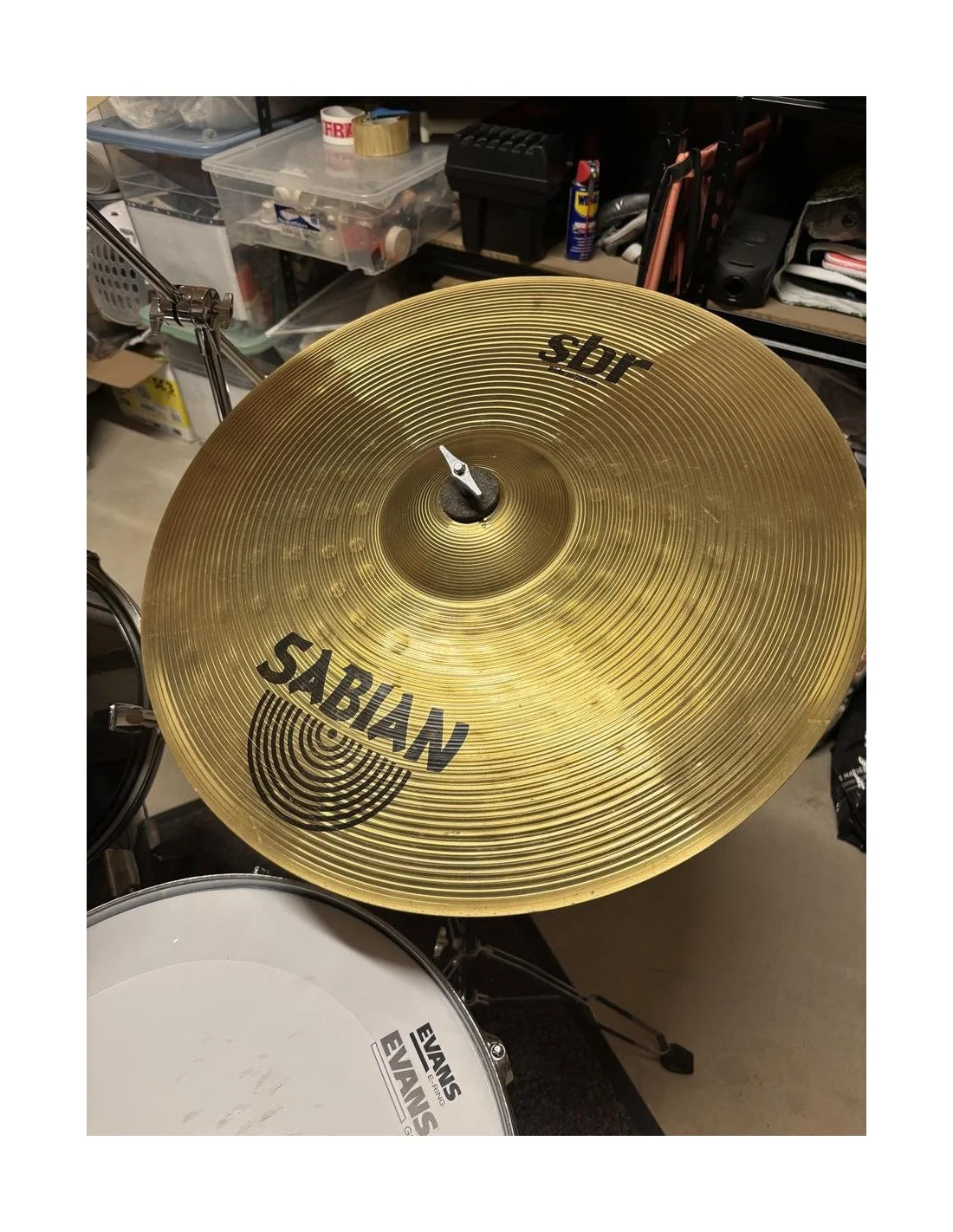
Three mistakes keep coming up among beginners: tightening the heads too much (metallic sound), tightening unevenly (a detuned head that sounds off) and placing everything too high (tense shoulders). Take the time to set up, then play again for a few minutes to feel what is in the way.
Do not hesitate to adjust regularly: the setup is never final. With experience, you will develop your preferences and fine-tune each element. Brands such as Pearl or Tama offer mounting systems that make these adjustments easier.
FAQ - Setting up your drum kit as a beginner
Do you need a special tool to set up your drum kit?
A simple tuning key is enough for the heads. Most drum kits come with one. For the rest, your hands are enough.
How do you know if a head is well tuned?
Strike near each rod: the sound must be identical all around. If one spot sounds lower or higher, adjust that rod.
At what height should you place your snare drum?
At belly-button height, slightly angled toward you, so that your sticks fall on it naturally.
Are my cymbals too high?
If you have to raise your elbow above your shoulder to strike them, they are too high. Lower them until the motion is natural.
Can you set up an electronic drum kit the same way?
Yes for the position and the height of the pads. Tuning the sounds is done via the module, not the tension rods.
How long does it take to set up your drum kit properly?
Allow thirty to forty-five minutes the first time, then a few minutes of adjustment at each session after that.
Ready to find your drum kit?
Discover our acoustic and electronic drum kits
See the drum kitsAnd there you go! We hope this article helped you set up your drum kit. All that is left is to browse Green Musicians to find the instrument of your dreams at the best price.
We offer a complete catalog of musical instruments featuring brands from around the world such as Pearl, Tama, DW, Remo, Zildjian and many more. Whether you are an amateur or professional musician, our marketplace is designed to offer you the very best of music.
Green Musicians is also the music marketplace where everyone can sell or buy music gear with complete confidence: new, refurbished and used instruments, as well as software, plugins, sheet music and samples.
For any question or comment about this article, or if you would like to suggest a topic for an article, feel free to share your thoughts below.

 What is a looper and how to use it?What is a looper and how to use it? The loop principle, choosing a model, practicing, composing and playing live: the complete beginner's guide.Read more
 How long does it take to learn the drums?How long does it take to learn the drums: first grooves, first songs and independence. The realistic benchmarks and the right practice rhythm.Read more
 Vestax: Japanese legend of DJ equipment and vinyl turntablesVestax, founded in Tokyo in 1977, made DJing history with its revolutionary vinyl turntables and legendary mixers. A look back at the legacy of a cult brand that continues to inspire DJs around the world.Read more
 Hagstrom: Swedish guitars and basses since 1958Hagstrom, Swedish guitar excellence since 1958.Read more
 Altamira: classical and flamenco guitars inspired by Spanish traditionAltamira offers classical, flamenco, gypsy jazz guitars and historical replicas inspired by Spanish tradition. From beginner to concertist, discover authentic lutherie at the right price.Read more
 NoiseWorks VoiceAssist: cleaner vocals in less timeWhat if the next real upgrade to your studio were not a new microphone or a preamp, but time? That is the question NoiseWorks raises with VoiceAssist, a plugin that tackles the least creative part of vocal work: cleanup. Background noise, room reverb,Read more
 How to sound a band rehearsal?How to sound a band rehearsal: gear, speaker placement, volume balance and voice amplification for effective rehearsals that protect your hearing.Read more
 How to get a good stage monitor mix?How to get a good stage monitor mix: gear, console connections, volume settings without feedback and placement tips for musicians.Read more
 Which PA amplifier for a room of 100 people?Which PA amplifier for a room of 100 people: power, speaker types, placement and budget advice to sound your venue properly.Read more
 How to connect your computer to a PA system?How to connect your computer to a PA system: audio interface, cables and console settings, with the fallback solutions and the mistakes to avoid.Read more
Leave a comment