Singing while accompanying yourself on piano or guitar is a magical skill: it lets you rehearse alone, share a song with friends or sketch out composition ideas. Yet coordinating your voice and your hands seems difficult at first. With the right method and a little regularity, anyone can do it. Here is how to get started with confidence.
Is it difficult to sing while playing an instrument?
No, it is not that difficult, provided you simplify the instrumental part at the beginning. The difficulty comes from your brain having to handle two tasks at once: the rhythm of your fingers and the melody of your voice. Starting with simple chords and a slow tempo, coordination settles in within a few weeks.
The key is to not play what you sing: if your hands play the melody, your voice has no reason to exist. Play chords or a simple rhythmic accompaniment, and let the voice carry the melody.
Should you start with piano or guitar?
It all depends on your taste: the piano offers precise notes and a clear visualization of pitches, ideal for intonation and harmony work. The guitar is more portable and more immediate for accompanying popular songs with simple chords.
For a beginner singer, the guitar with three or four chords lets you sing very quickly. The digital piano, meanwhile, helps you work on intonation and understand song structure. Discover our selection of digital pianos and acoustic guitars to choose your instrument.
How to learn to sing while playing guitar?
Start by learning the accompaniment by heart: play the chords with your eyes closed until your fingers stop thinking. Then hum the melody while you play, without words. Then sing the lyrics softly, and finally put it all together at normal tempo.

Tip: start with songs with a simple rhythm in steady eighth notes, and tap the beat with your foot to anchor the tempo. If you are starting guitar, our article how long does it take to learn guitar will give you a realistic idea of progress.
How to learn to sing while playing piano?
On piano, the principle is the same: automate the accompaniment before adding the voice. Play a simple chord progression, for example three or four chords, until it flows. Then add the voice on top, starting by humming and then singing the lyrics.
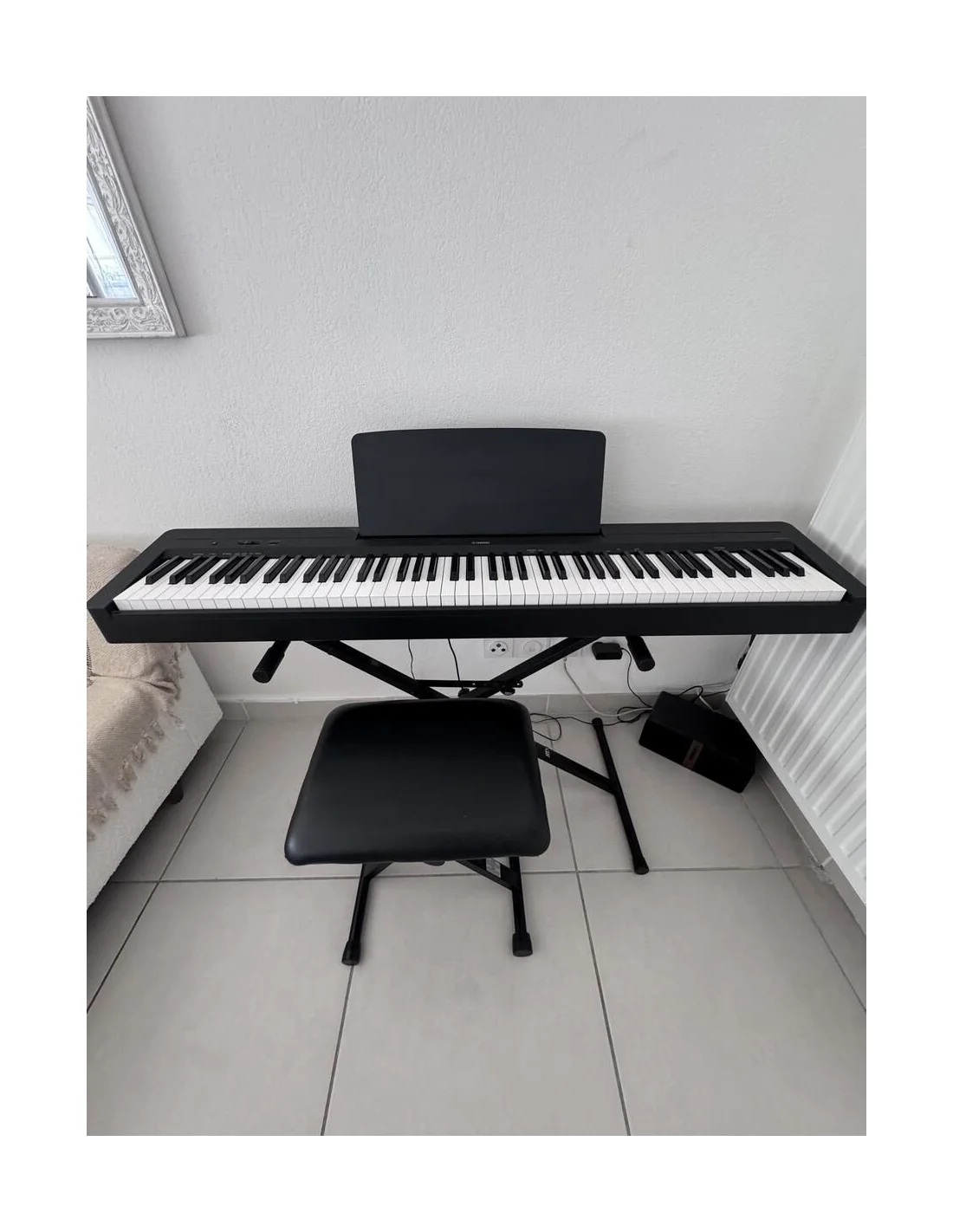
The piano has one advantage: you can play the starting note to check your intonation before each phrase. A digital piano with a good keyboard will accompany you for years.
Which mistakes to avoid when starting out?
The first mistake is wanting to play too complex an accompaniment: keep it simple and steady. The second is stopping when you make a mistake: learn to keep going even if a note fails. The third is neglecting the tempo: without a steady pulse, voice and hands fall out of sync.
Finally, do not get discouraged after a week: coordination is a skill that builds. To progress in singing, our article how to learn to sing in tune perfectly complements your accompaniment work.
Key takeaways
- ✔ Simplify : simple chords and a slow tempo at the beginning.
- ✔ Automate : play the accompaniment by heart before adding the voice.
- ✔ Keep going : do not stop on a mistake, hold the tempo.
🧑💼 The Green Musicians tip
Choose songs whose melody you know by heart: it is the biggest accelerator of coordination. Your brain frees up processing capacity as soon as the voice no longer needs to be "read". Start with songs at a moderate tempo, then increase gradually.
FAQ - Singing while accompanying yourself on piano or guitar
How long does it take to learn to sing while playing?
First sung accompaniments come within a few weeks of regular practice. Full fluency takes a few months, depending on your instrumental level.
Is it better to learn piano or guitar to accompany your voice?
It depends on your taste. The guitar is faster for accompanying simple songs; the piano is ideal for intonation and harmony.
How do you keep from getting lost between voice and hands?
Automate the accompaniment until you play it without thinking, then add the voice gradually: hum, then sing the lyrics.
Do I need to read music to sing while accompanying myself?
No. Simple chords and a trained ear are enough for most popular songs.
Do you need a particular instrument to start?
An acoustic guitar or an entry-level digital piano is more than enough to start accompanying.
Does singing while playing improve intonation?
Yes, the instrument provides the harmonic reference and forces you to place your voice against chords, which develops the ear.
Ready to sing while accompanying yourself?
Discover our selection of digital pianos and guitars for your first sessions
Browse digital pianosAnd there you have it! We hope this article makes you want to sing while accompanying yourself and share your music. All you have to do is browse Green Musicians to find the gear of your dreams at the best price.
We offer a complete catalog of musical instruments featuring brands from around the world such as Yamaha, Kawai, Fender, Cort and many more. Whether you are an amateur or professional singer, our marketplace is designed to offer you the best of music.
Green Musicians is also the music marketplace where everyone can buy or sell music gear with confidence: new instruments, refurbished, second-hand, but also software, plugins, sheet music and samples.
For any question or comment about this article, or if you would like to suggest a topic, feel free to share your thoughts below.

 What is a looper and how to use it?What is a looper and how to use it? The loop principle, choosing a model, practicing, composing and playing live: the complete beginner's guide.Read more
 How long does it take to learn the drums?How long does it take to learn the drums: first grooves, first songs and independence. The realistic benchmarks and the right practice rhythm.Read more
 Vestax: Japanese legend of DJ equipment and vinyl turntablesVestax, founded in Tokyo in 1977, made DJing history with its revolutionary vinyl turntables and legendary mixers. A look back at the legacy of a cult brand that continues to inspire DJs around the world.Read more
 Hagstrom: Swedish guitars and basses since 1958Hagstrom, Swedish guitar excellence since 1958.Read more
 Altamira: classical and flamenco guitars inspired by Spanish traditionAltamira offers classical, flamenco, gypsy jazz guitars and historical replicas inspired by Spanish tradition. From beginner to concertist, discover authentic lutherie at the right price.Read more
 NoiseWorks VoiceAssist: cleaner vocals in less timeWhat if the next real upgrade to your studio were not a new microphone or a preamp, but time? That is the question NoiseWorks raises with VoiceAssist, a plugin that tackles the least creative part of vocal work: cleanup. Background noise, room reverb,Read more
 How to sound a band rehearsal?How to sound a band rehearsal: gear, speaker placement, volume balance and voice amplification for effective rehearsals that protect your hearing.Read more
 How to get a good stage monitor mix?How to get a good stage monitor mix: gear, console connections, volume settings without feedback and placement tips for musicians.Read more
 Which PA amplifier for a room of 100 people?Which PA amplifier for a room of 100 people: power, speaker types, placement and budget advice to sound your venue properly.Read more
 How to connect your computer to a PA system?How to connect your computer to a PA system: audio interface, cables and console settings, with the fallback solutions and the mistakes to avoid.Read more
Leave a comment