The looper has become an essential accessory for guitarists, yet its principle intrigues: how can a small box repeat endlessly what you have just played? Simply put, a looper records a passage of music and plays it back in a loop while you keep playing over it. Here is what you need to know to choose and use a looper, whether you are a beginner or an experienced musician.
What is a looper and how to use it?
A looper (or loop station) is a device that records a passage played on guitar or voice, then repeats it in an endless loop while you record new layers on top. To use it, simply press the pedal to start recording, press it again to stop and start the loop, then add successive layers: rhythm, chords, melody, solo.
Its appeal is twofold: the looper is a formidable composition and arrangement tool, but also an excellent teacher of rhythm and consistency. Playing a stable loop demands a rhythmic precision that you quickly develop with practice. If you are discovering pedals in general, our guide to choosing an effects pedal and our comparison between separate pedals and multieffects will help you build your first pedalboard.
How does a looper pedal work?
A looper works simply: a footswitch triggers the actions (record, play, overdub, undo), a small screen or LEDs show the status, and internal memory stores the loops. Recent models add a built-in rhythm section (metronome and drum patterns), storage for several loop banks and sometimes built-in effects.
The layering principle is central: the first layer is the foundation (often a chord rhythm), the second a bass line or a melody, the third a solo. Each layer stacks on the previous one, and the "undo" function lets you remove the last layer if it does not suit you.
Which looper should you choose to get started?
To get started, a simple looper with a loop time of 5 to 10 minutes, single-footswitch control and a built-in rhythm section is more than enough. Models with two or more footswitches make navigation easier (play, stop, undo), but ease of use is what matters most.
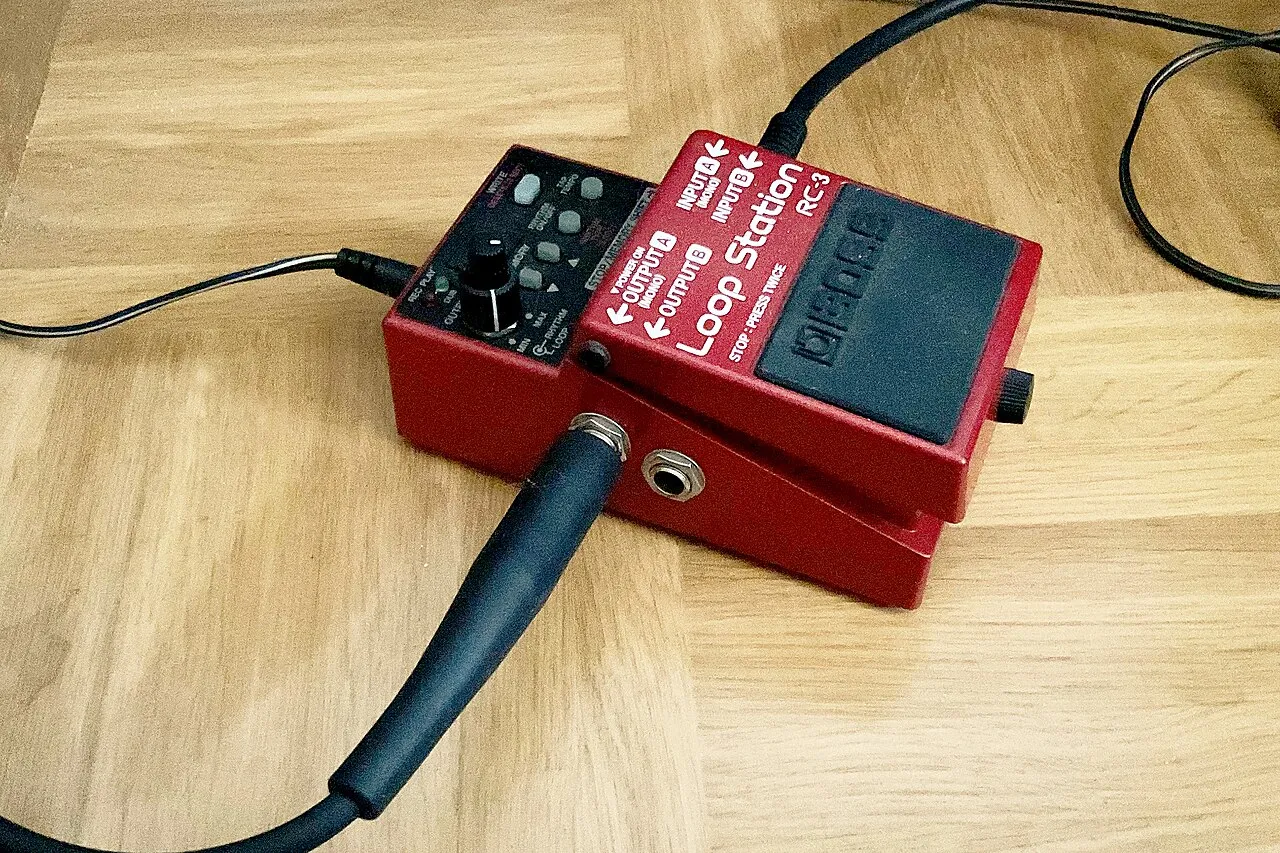
Also think about connectivity: an instrument input for the guitar, an output to the amp or the interface, and ideally a microphone input for looping the voice. Audio quality (sampling rate) matters if you record heavily stacked loops: entry-level models compress the signal slightly, while higher-end models keep more definition.
🧑💼 The Green Musicians tip
For perfectly tight loops, always play the first layer over a steady rhythm (metronome or built-in rhythm section) and keep a fluid foot movement: press the pedal firmly on the first beat of the bar. The accuracy of the recording stop is the key to a clean loop.
How to use a looper to practice?
The looper is a formidable practice tool: it lets you work on tempo consistency, harmony over a chord progression, improvisation over a chart, or phrasing by stacking a rhythm part and then a solo. It conveniently replaces a backing track and adapts to your level.
Start simple: a two-chord loop, then a bass line, then a melody. Gradually increase the complexity. The looper also reveals rhythmic flaws: if your loop "drifts", your playing lacks consistency, which is valuable information for making progress.
How to use a looper to compose?
For composing, the looper lets you try arrangements live: lay down a rhythm part, test a melody on top, add a counter-melody, remove a layer, start over. It is an instant musical laboratory, with no need for a DAW.
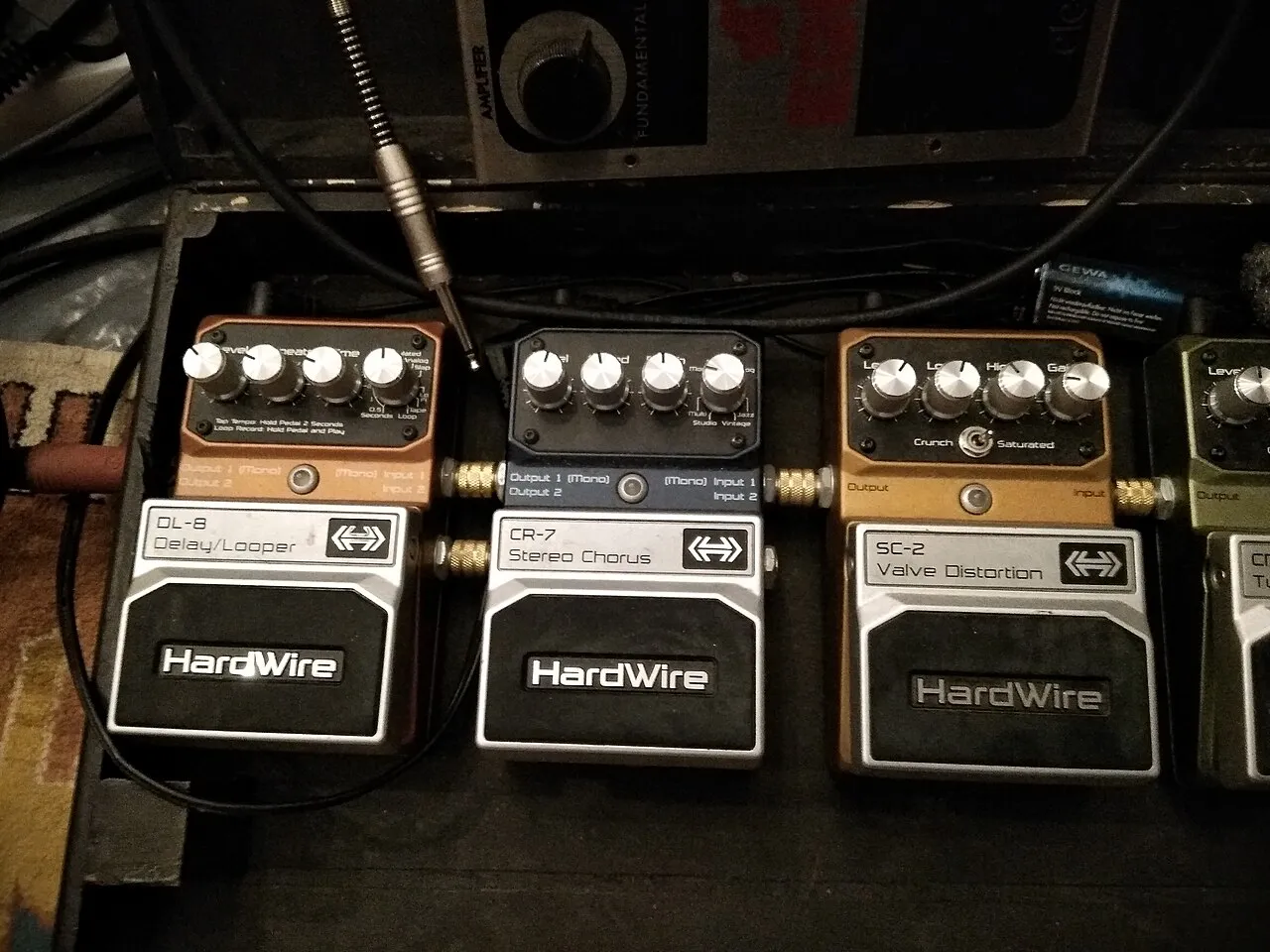
Models with bank storage let you keep several arrangements and recall them on stage. Some artists build entire songs live, layer by layer, turning a solo guitarist into a one-man band. Brands such as Boss, a pioneer of loop stations, and DigiTech offer reference models in this field.
Can you use a looper live?
Yes, the looper is a very popular stage tool: it lets the solo musician add layers in real time and build rich arrangements. For live use, favor a sturdy model with reliable footswitches, a good output level and a built-in rhythm section to lock the loops.
Watch your position in the chain: the looper is usually connected last in the effects chain, after the pedals, so that it loops the final sound. If you use several instruments or a microphone, a model with several inputs is preferable.
⚠️ Mistakes to avoid
- ❌ Stacking too many layers: the sound gets messy and every mistake stays audible. Limit yourself to three or four clearly distinct layers.
- ❌ Playing without a reference beat: without a metronome, loops drift quickly. Turn on the built-in rhythm section or count the beats out loud.
- ❌ Getting the chain position wrong: a looper placed before the effects loops an unprocessed sound and does not reproduce what you hear. Put it at the end of the chain.
FAQ - Guitar looper
Is a looper useful for a beginner?
Yes: it develops your sense of rhythm, harmonic listening and consistency, while making practice more fun. A simple entry-level model is enough to start.
What is the difference between a looper and a multi-effects unit?
The looper records and repeats loops; the multi-effects unit offers several effects (distortion, delay, reverb). Some multi-effects units include a looper, but the two functions remain distinct.
Can you loop the voice with a looper?
Yes, if the looper has a microphone input with phantom power for condenser microphones. It is ideal for creating live vocal harmonies.
How long can a loop be?
It depends on the model: from 30 seconds to several minutes, or even hours on high-end models. For regular use, a loop time of 5 to 10 minutes is more than enough.
How do you erase a loop?
Most loopers have a double-press or long-press function to erase the current loop. The undo function removes only the last layer.
Do you need an analog or digital looper?
Modern loopers are digital: they offer more memory, quality and features. The term "analog" hardly applies to current models anymore.
And that's it! We hope this article helped you understand what a looper is and how to use it. All that's left is to browse Green Musicians to find the looper of your dreams at the best price.
We offer a complete catalog of musical instruments featuring brands from all over the world such as Fender, Gibson, Martin, Taylor, Ibanez and many more. Whether you are an amateur or a professional musician, our marketplace is designed to bring you the best of music.
Green Musicians is also the music marketplace where everyone can sell or buy music gear with total confidence: new, refurbished and used instruments, as well as software, plugins, sheet music and samples.
For any question or comment about this article, or if you would like to suggest an article topic, feel free to speak up below.

 What is a looper and how to use it?What is a looper and how to use it? The loop principle, choosing a model, practicing, composing and playing live: the complete beginner's guide.Read more
 How long does it take to learn the drums?How long does it take to learn the drums: first grooves, first songs and independence. The realistic benchmarks and the right practice rhythm.Read more
 Vestax: Japanese legend of DJ equipment and vinyl turntablesVestax, founded in Tokyo in 1977, made DJing history with its revolutionary vinyl turntables and legendary mixers. A look back at the legacy of a cult brand that continues to inspire DJs around the world.Read more
 Hagstrom: Swedish guitars and basses since 1958Hagstrom, Swedish guitar excellence since 1958.Read more
 Altamira: classical and flamenco guitars inspired by Spanish traditionAltamira offers classical, flamenco, gypsy jazz guitars and historical replicas inspired by Spanish tradition. From beginner to concertist, discover authentic lutherie at the right price.Read more
 NoiseWorks VoiceAssist: cleaner vocals in less timeWhat if the next real upgrade to your studio were not a new microphone or a preamp, but time? That is the question NoiseWorks raises with VoiceAssist, a plugin that tackles the least creative part of vocal work: cleanup. Background noise, room reverb,Read more
 How to sound a band rehearsal?How to sound a band rehearsal: gear, speaker placement, volume balance and voice amplification for effective rehearsals that protect your hearing.Read more
 How to get a good stage monitor mix?How to get a good stage monitor mix: gear, console connections, volume settings without feedback and placement tips for musicians.Read more
 Which PA amplifier for a room of 100 people?Which PA amplifier for a room of 100 people: power, speaker types, placement and budget advice to sound your venue properly.Read more
 How to connect your computer to a PA system?How to connect your computer to a PA system: audio interface, cables and console settings, with the fallback solutions and the mistakes to avoid.Read more
Leave a comment