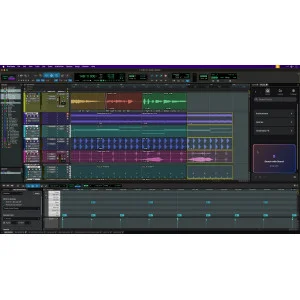
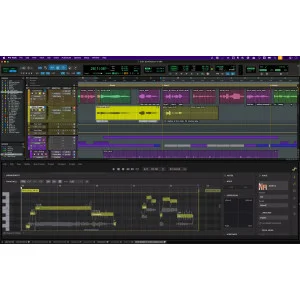
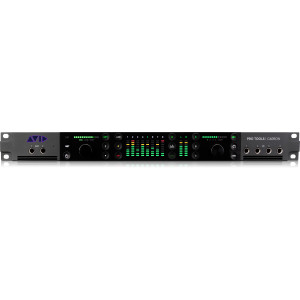
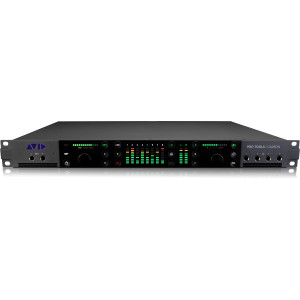
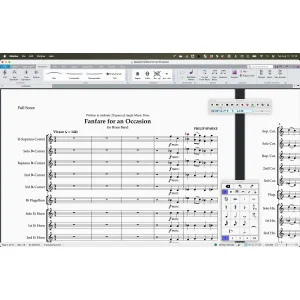
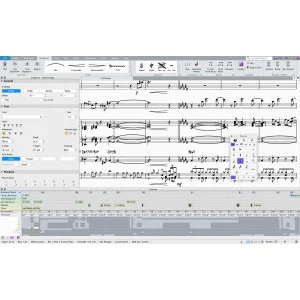
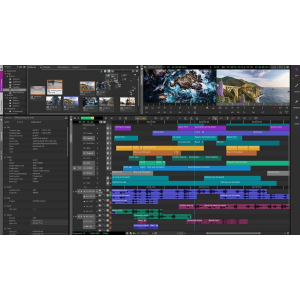
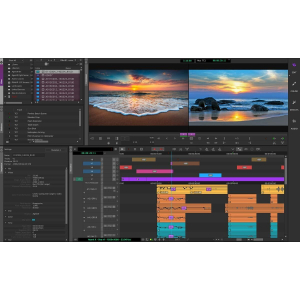
Avid, famous for Pro Tools, is a must-have for audio professionals. Our Avid products at Green Musicians offer you the opportunity to access this cutting-edge technology, essential for any music production, at reasonable costs.
A Revolutionary Birth: From Digidesign to AVID
In the 1980s, two visionaries, Peter Gotcher and Evan Brooks, laid the foundation for what would become Pro Tools. Their first project, DigiDrums, was a processor designed for the E-mu Drumulator, a tool intended to modify sounds from the E-MU Emulator keyboard. But this was just the beginning.
Facing E-MU Systems' refusal to integrate their Sound Tools software into the Emulator III keyboard, Gotcher and Brooks founded Digidesign. Their innovation, the first version of Pro Tools, was released in 1991. But Digidesign's rise was not over. In 2010, it was acquired by an industry giant: AVID Technology.
Pro Tools: Beyond Just Music
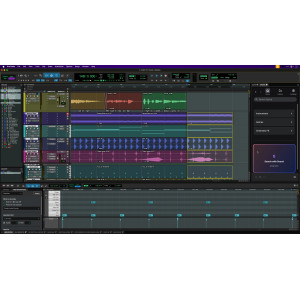
AVID, with Pro Tools, has redefined how we approach music production. Not simply a music recording tool, it has made its mark in various fields: audio post-production for films and television, sound design, music composition, and, of course, music recording and mixing.
It is therefore not surprising that iconic albums like "Summer in Paradise" by the Beach Boys in 1992 were entirely recorded, edited, and mixed on Pro Tools. But why has this platform become so essential in the music industry?
AVID's Versatility: From Hardware to Software
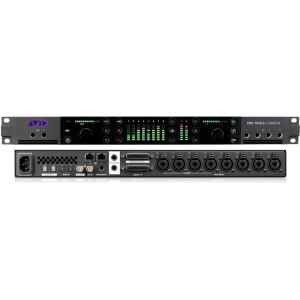
AVID has created a complete ecosystem for producers. In addition to Pro Tools, the AVID software family offers both professional tools with DSP cards and various hardware interfaces, and lighter versions for the general public, such as Mbox. This diverse range has made AVID accessible to everyone, from amateur producers to studio sound professionals.
Another aspect that sets Pro Tools apart is its adaptability. Initially using the HUI MIDI protocol, AVID integrated the Ethernet EUCON3 protocol after acquiring Euphonix, providing more power and flexibility.
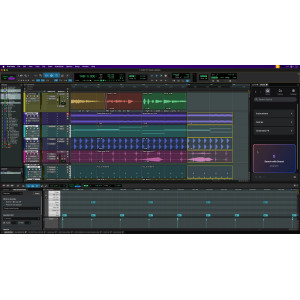
When connected to a compatible control surface or digital console, Pro Tools can serve as a recorder, player, and even a sound processor through its plugins and analog or digital Rewire peripherals. It is these kinds of features that have made it indispensable in modern studios.
AVID in the Modern Studio
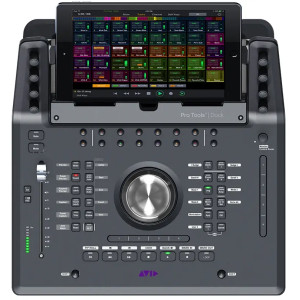
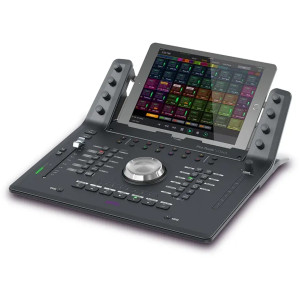
The advantage of using Pro Tools in the studio lies in its ability to bridge the gap between traditional analog consoles and current digital audio workstations. Control surfaces offer physical controls for the software, making the experience more intuitive and efficient.
Successive versions of Pro Tools have also kept pace with technological advancements, from supporting dedicated DSP cards with Pro Tools MIX in 1998 to high-definition audio support with Pro Tools HD in 2002. With each update, Pro Tools has continued to solidify its position as the preferred tool for professionals.
Pro Tools version 10, completely rewritten, even introduced the ability to mix in 48 and 32-bit floating-point and to mix in 64 bits. Since the release of Pro Tools 11 in 2013, the software now operates in 64 bits, abandoning the RTAS format for the new AAX format.
The Latest Pro Tools Updates: Continuous Advancement
After the release of Pro Tools 11 in 2013, AVID has continued to innovate, taking Pro Tools to new heights. Major versions from 2018 to 2020 have incorporated significant efficiency and feature improvements. For example, Pro Tools 2018 introduced workflow enhancements, allowing users to work faster with keyboard shortcuts and advanced editing functions. Additionally, new collaboration features have made remote project management smoother, adapting to the globalized nature of today's music production.
Pro Tools 2019 and 2020 continued this trend by incorporating performance improvements and enhanced automation capabilities. The updates enabled broader plugin support, reduced latency, and enhancements in session management. These advancements have solidified Pro Tools' position as one of the top DAWs in the market, showcasing that AVID remains at the forefront of innovation in the field of music and audio production.
Conclusion: The Indelible Mark
From its inception as an innovative small company to its current status as an industry giant, AVID has truly revolutionized the audio landscape. Pro Tools, as the frontrunner, has not only defined but also raised the standards of music and audio production.
Today, whether you walk into a studio in Hollywood, a small room of an independent producer in Paris, or a music school in Tokyo, chances are you will encounter AVID technology. With such a rich history and a constantly evolving offering, AVID seems poised to shape the sound of many generations to come.