Cart
There are no more items in your cart
- Supplier Direct
- -18%
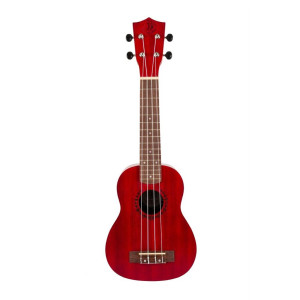
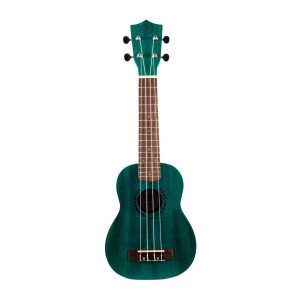
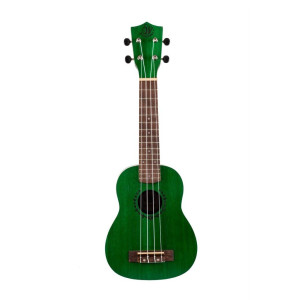
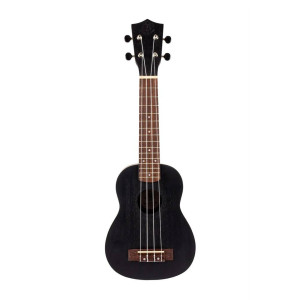
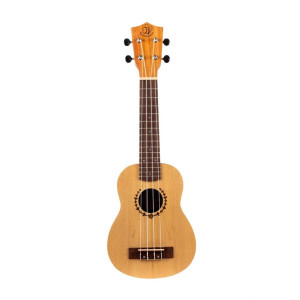
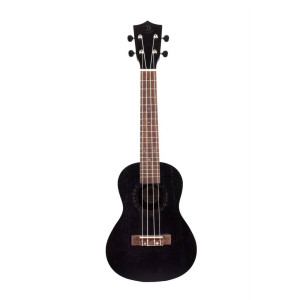
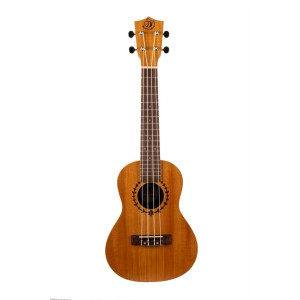
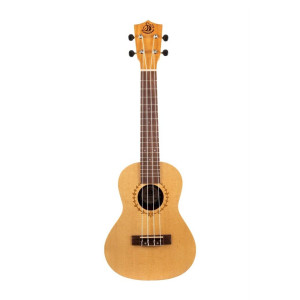
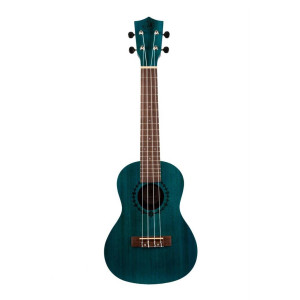
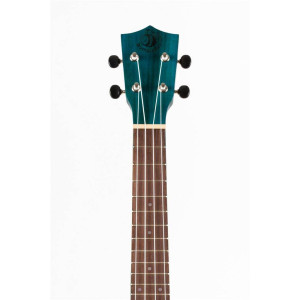
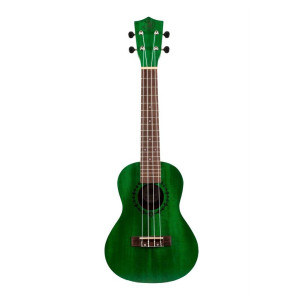
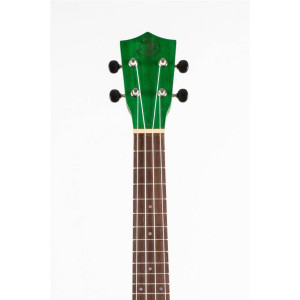
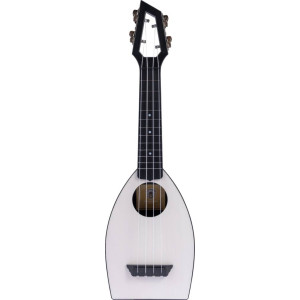
Ukuleles that make you want to play the moment they leave the bag. Bumblebee puts all its craft into one instrument, from soprano to baritone, in solid or laminated wood, with colour finishes — black, blue, red, green, violet, pink, white — that break with the usual mahogany. Every model ships with its bag, ready to tune. Whether you want a first ukulele for a child, a travel companion or a tenor to hold its own in a group, the range reads at a glance: one series per size, one number per finish level. At Green Musicians, through a short supply chain.
Bumblebee is a brand devoted entirely to the ukulele. Where many catalogues spread their effort across dozens of instrument families, this one does the opposite: a single instrument, from soprano to baritone, in colour finishes that make you want to take it out of its bag. The range reads at a glance and shares the same build logic, the same instant playability and the same concern for tuning that actually holds.
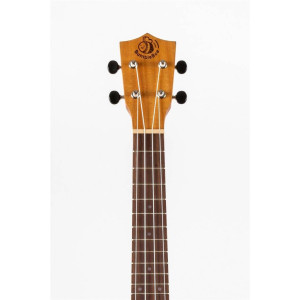
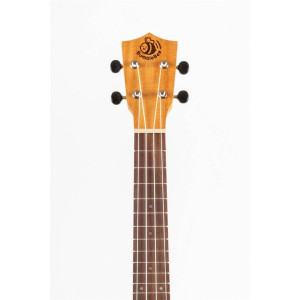
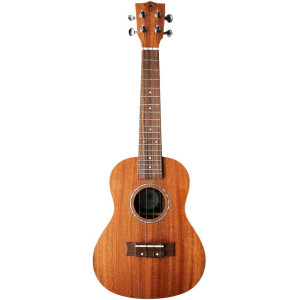
The construction rests on two families of wood. On one side solid timber — spruce top, mahogany body and sides — for a richer response and a voice that opens up over the years. On the other, laminated construction: more stable when humidity shifts and far more forgiving for an instrument that travels. Every model ships with a bag. The series use a plain code — BUS for soprano, BUC for concert, BUT for tenor.
💡 Key points
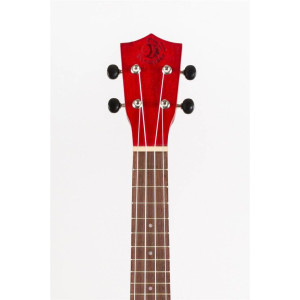
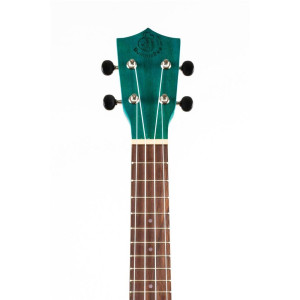
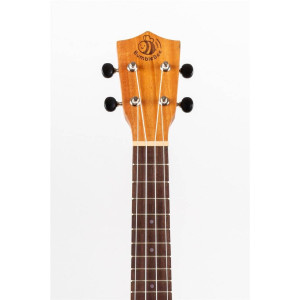
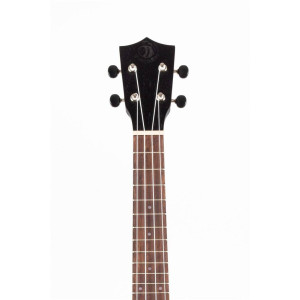
Because the brand does not sell a decorative object but an instrument that is in tune and playable from the first minute. The first test of any ukulele is not colour or price: it is tuning stability, string height above the fretboard and the quality of the tuners. Bumblebee builds its range around that base, then adds an offer you can read without a decoder: one series per size, one number per finish level.
Size decides comfort long before it decides tone. The smaller the instrument, the closer the frets and the more the fretting hand has to bunch up; the bigger it is, the more room the hand gets, but the more force a barre demands. There is no universal answer, only an answer for your hands and an answer for how you play.
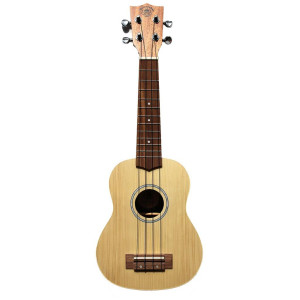
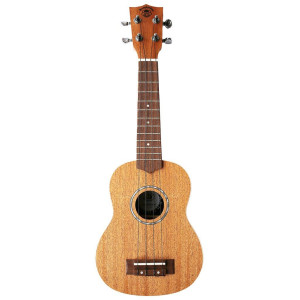
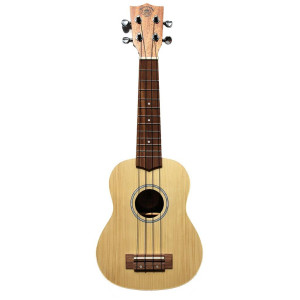
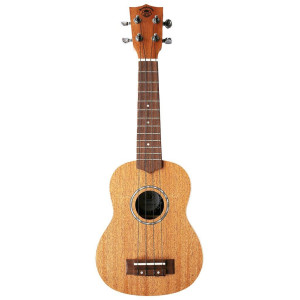
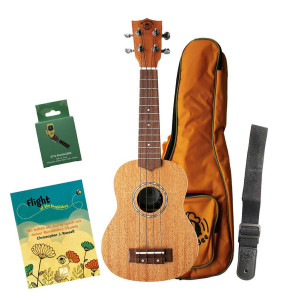
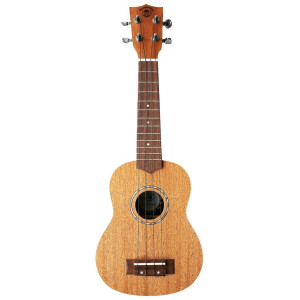
Roughly 53 cm long with a 35 cm scale: it fits in a daypack and has that cheerful nasal bite everyone associates with the ukulele. Ideal for a child or for travel. Its small body projects less low end, so it is a strumming and singing instrument rather than a solo machine.
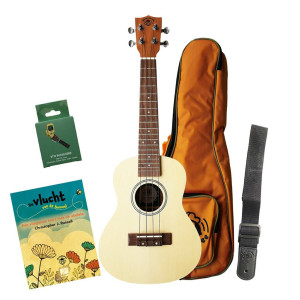
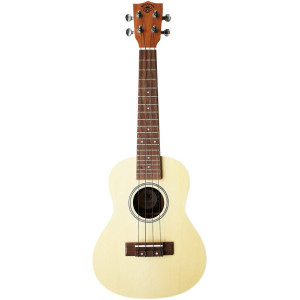
With 58 cm and a 38 cm scale, the fingers get room, barre chords become reachable and volume gains body without losing agility. For an adult starting out it is usually the most comfortable choice, and the one that forgives a hesitant left hand.
At 66 cm with a 43 cm scale, the tenor offers wide frets and more projection — useful the moment you play with other people. It is the size for players who want low end, melody lines and an instrument that does not choke when you dig in.
The baritone stands apart with a different tuning — D, G, B, E — and a range close to the top four strings of a guitar. It is the ukulele for guitarists who want to transpose their repertoire without relearning it. It asks for a little more hand strength but opens a register the other sizes cannot reach.
The ukulele has a reputation for being easy, and it earns it for one precise reason: four strings, four useful fingers, chords that ring with two or three fingers down. That simplicity is real, but the first weeks go better with an order of work rather than fifty different videos.
C, A minor, F and G will carry hundreds of songs. C and A minor take a single finger, F asks for a partial barre across two strings, G needs a little accuracy. Once those four shapes settle, a whole song holds together.
The strumming hand makes the music. A steady up-and-down motion, kept slow, beats a fast and choppy chord sequence. Practise with a metronome at 60 and then 70 bpm: twenty minutes a day gets a four-chord song presentable in a fortnight.
A new ukulele goes out of tune. That is not a fault: fresh strings stretch and need two or three weeks of playing to settle. Tuning before every session is the habit that trains the ear fastest and makes the sense of sourness disappear soonest.
Soprano, concert and tenor tune to G, C, E, A; the baritone to D, G, B, E. A clip-on tuner remains the most reliable tool. Always wind up towards the target note, never down: the string holds better that way.
A solid-wood instrument lives with the air around it: below 40 % humidity it can crack, above 70 % it swells and the action rises. Keep it away from radiators, sun-baked cars and very dry rooms — a closed bag and a hygrometer solve the problem in most homes. A microfibre cloth after each session removes sweat, which attacks satin finishes.
Wood is not everything, but it weighs heavily. A solid spruce top gives bright highs and projection that opens with playing; solid mahogany rounds off the top end and favours the midrange. Laminated construction brings real stability — a genuine advantage when the instrument lives in a rucksack rather than a temperature-controlled room.
For a first ukulele, laminate is sensible: less sensitive to humidity, lighter, more affordable. For an instrument you keep and play hard, solid wood brings a depth laminate cannot reach. The usual compromise — solid top, laminated body — captures most of the tone.
The soprano is the travel king: 53 cm, under a kilo, it disappears into a backpack. Outdoors, prefer a laminate or an opaque finish, which cope better with sun and dry air than a varnished solid. Opaque colours — black, blue, violet, pink, white — dress a simpler timber without harming the sound, provided the top stays thin.
🎯 This is the right choice if...
For an adult, concert is usually more comfortable: fingers are not cramped and barres stay possible. The soprano is unbeatable for a child or for travel. If in doubt, take the concert.
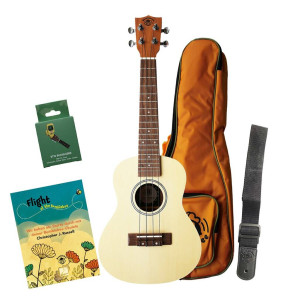
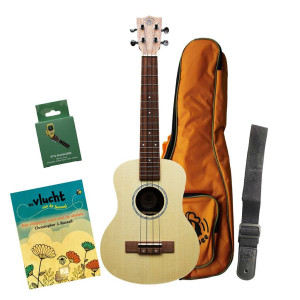
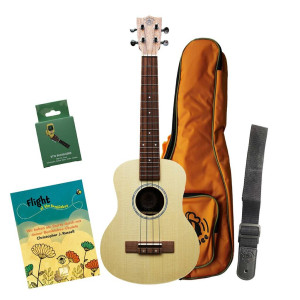
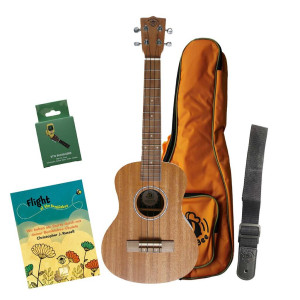
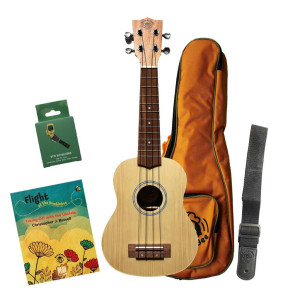
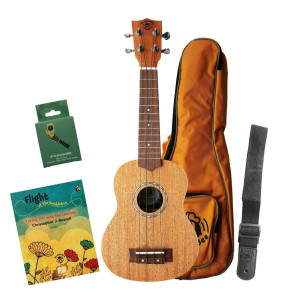
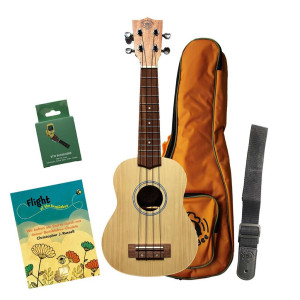
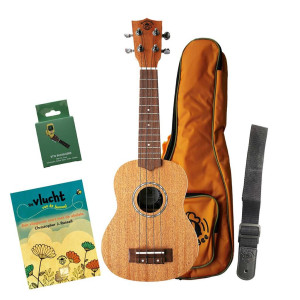
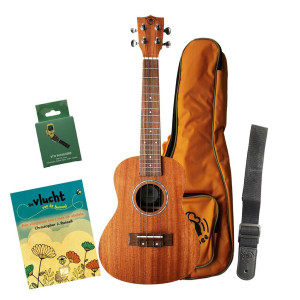
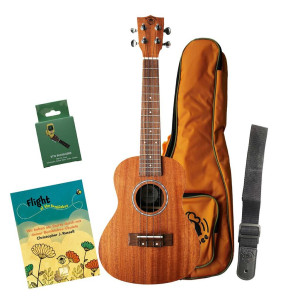
Yes, every Bumblebee ukulele ships with its bag, which protects the instrument from knocks and dust between sessions.
They are built for that: an instrument, a bag and a method that starts with the first chords. The booklets come in Italian, Dutch, German and English — check the language on the product page before ordering.
Size, and therefore scale length and comfort. The soprano is about 53 cm with a 35 cm scale, the concert 58 cm with 38 cm, the tenor 66 cm with 43 cm and the baritone 76 cm with 48 cm. The first three tune in G-C-E-A, the baritone in D-G-B-E; the bigger the body, the stronger the low end.
The soprano is the best fit up to about ten years old: light, short, with frets within easy reach.
A few weeks to accompany simple four-chord songs, a few months to change chords without looking. Fifteen minutes daily beats an hour on Sunday.
Not straight away, unless the instrument has sat in stock for a long time and the strings sound dull. Do expect to retune often for the first fortnight.
Yes, more than laminate. Below 40 % relative humidity solid timber can crack, especially in winter with the heating on. Keep it in its bag, away from radiators.
Only if the model has a pickup and a jack output, which is not the case across the range. Check the product page for electronics.